





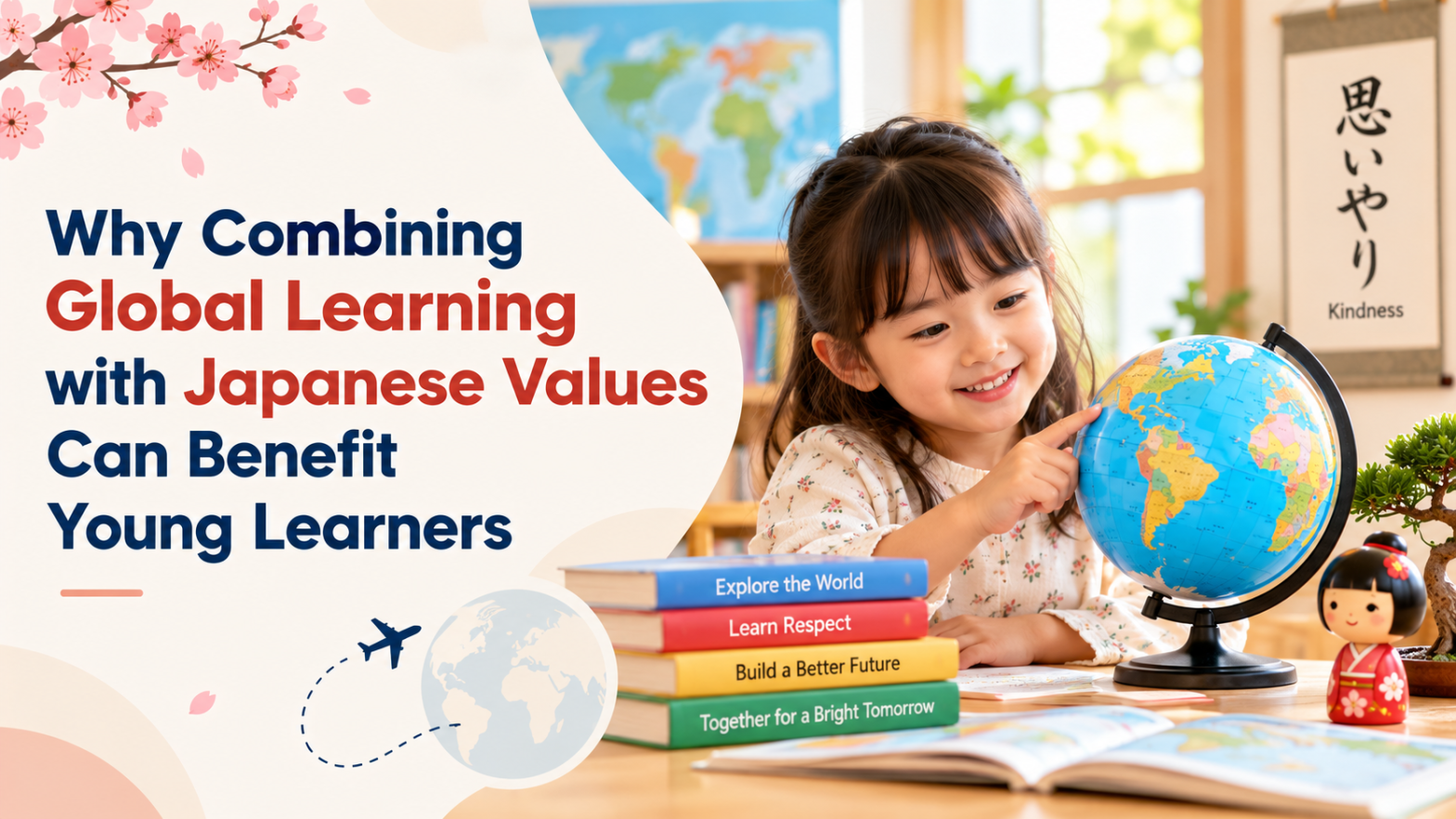
Why Combining Global Learning with Japanese Values Can Benefit Young Learners
Key Highlights
- Global learning can help children become curious, adaptable and open to different perspectives.
- Japanese values can strengthen respect, mindfulness, harmony and independence.
- Play and inquiry can make learning active and meaningful.
- Everyday experiences can develop practical and social skills.
- A nurturing environment can support confidence, creativity and emotional growth.
Introduction
Children are growing up in a world where cultures, ideas and experiences are increasingly connected. At FUJI Infinity International Preschool, Recognized as Best Preschool in Gurgaon, even during the preschool years, they can begin developing the curiosity and confidence needed to understand a world that is larger than their immediate surroundings.
However, preparing children for a global future does not mean moving away from cultural values. In fact, global awareness can become more meaningful when children also learn qualities such as respect, humility, responsibility and compassion.
For parents considering Good International Play Schools in Gurgaon, this combination can provide a useful perspective on how preschool education can prepare children not just for their next academic stage, but for life in a diverse and changing world.
Why Does Global Learning Matter in Early Childhood?
Global learning does not need to involve complicated international concepts for young children. At the preschool level, it can simply mean helping children become curious about different people, cultures, environments and ways of thinking.
Stories, music, art, food, languages and celebrations can introduce children to the idea that people may live differently while sharing many common experiences.
A global outlook therefore begins with a simple quality: curiosity about the world.
What Can Japanese Values Add to Global Learning?
Global learning provides breadth, while values provide direction.
Japanese-inspired early childhood education can introduce children to principles such as respect, mindfulness, harmony, courtesy, humility and self-reliance. These qualities can influence how children communicate, participate and respond to the people around them.
The educational philosophy followed by FUJI Infinity combines Japanese values with inquiry-based learning, with an emphasis on helping children develop confidence, respect and independence through curiosity, care and joyful discovery.
How Can Respect Shape Young Learners?
Respect is one of the foundations of positive relationships.
Young children can practise respect through simple experiences—listening when someone is speaking, waiting for a turn, greeting others, caring for shared materials and recognising that classmates may have different ideas.
Japanese ethos places importance on respectful interactions, mindfulness and harmony. These values can become part of everyday preschool experiences rather than being treated as separate moral lessons.
Why Is Independence Important?
Global education should not only teach children about the world; it should help them feel capable of participating in it.
Independence develops through small, age-appropriate opportunities. Children can choose an activity, organise their belongings, attempt a challenging task or help with classroom routines.
The adult’s role is to provide support without taking away every opportunity to try.
How Does Inquiry-Based Learning Support Development?
Children naturally ask questions.
Why does a shadow move? Why does a seed grow? Why does one object float while another sinks?
Instead of immediately providing every answer, inquiry-based learning encourages children to investigate. They can observe, predict, experiment, discuss and reconsider their ideas.
This method supports more than academic understanding. It can develop curiosity, communication, problem-solving and confidence.
What Role Does Play Have in Global Early Education?
Play gives children the freedom to explore ideas in ways that feel natural.
Building activities can introduce collaboration and problem-solving. Role play can develop communication and empathy. Music can encourage creativity. Stories can introduce different perspectives and cultures.
Purposeful play also allows children to practise social skills. They learn how to share, negotiate, wait, communicate and solve disagreements.
Can Global and Cultural Learning Work Together?
Global education and cultural identity do not have to compete.
Children can learn about other cultures while developing a strong understanding of their own values and surroundings. In fact, knowing that different cultures have different traditions can encourage children to appreciate both similarities and differences.
The educational approach described by FUJI Infinity specifically draws inspiration from both Japanese and Indian cultures, recognising shared principles such as respect, etiquette and appreciation for knowledge.
What Should Parents Look for in a Preschool?
Parents evaluating an international or globally oriented preschool can consider whether the environment:
- Encourages curiosity and questioning
- Respects each child’s individuality
- Provides opportunities for independent learning
- Uses play as an important learning method
- Develops collaboration and communication
- Introduces children to different perspectives
- Builds respect and responsibility through everyday experiences
- Supports emotional, social and physical development
- Maintains a safe, nurturing and child-friendly environment
A genuinely global approach should not simply add international themes to a curriculum. It should help children develop the mindset and values needed to engage positively with a diverse world.
Conclusion
Global learning becomes most meaningful when it is supported by strong human values.
At FUJI Infinity International Preschool, Gurgaon, children need curiosity to explore the world, but they also need respect to understand it. They need creativity to imagine possibilities, but independence to act on their ideas. They need confidence to express themselves, but compassion to listen to others.
For parents searching for Good International Play Schools in Gurgaon, this approach offers an important reminder: preparing children for the future is not only about teaching them more. It is about helping them become thoughtful, capable and open-minded individuals who are ready to keep learning throughout life.
FAQs
1. What is global learning in early childhood?
It introduces children to different ideas, cultures, perspectives and experiences in an age-appropriate and engaging way.
2. Why are Japanese values useful for young learners?
Values such as respect, courtesy, mindfulness, harmony and independence can support children’s social and personal development.
3. How does global learning encourage curiosity?
Exposure to different cultures, ideas and experiences gives children opportunities to ask questions and explore new perspectives.
4. Can children learn independence through preschool activities?
Yes. Simple choices, responsibilities and hands-on activities can gradually develop self-confidence and self-management.
5. Why is play important in an international preschool?
Play allows children to develop communication, creativity, collaboration and problem-solving skills while exploring different ideas.
6. What should parents expect from a globally oriented preschool?
Parents can look for a balanced environment that combines cultural awareness, inquiry, play, values, independence and holistic development.