





From Sandbox to Skill-Building: What Play Schools Teach Beyond Play

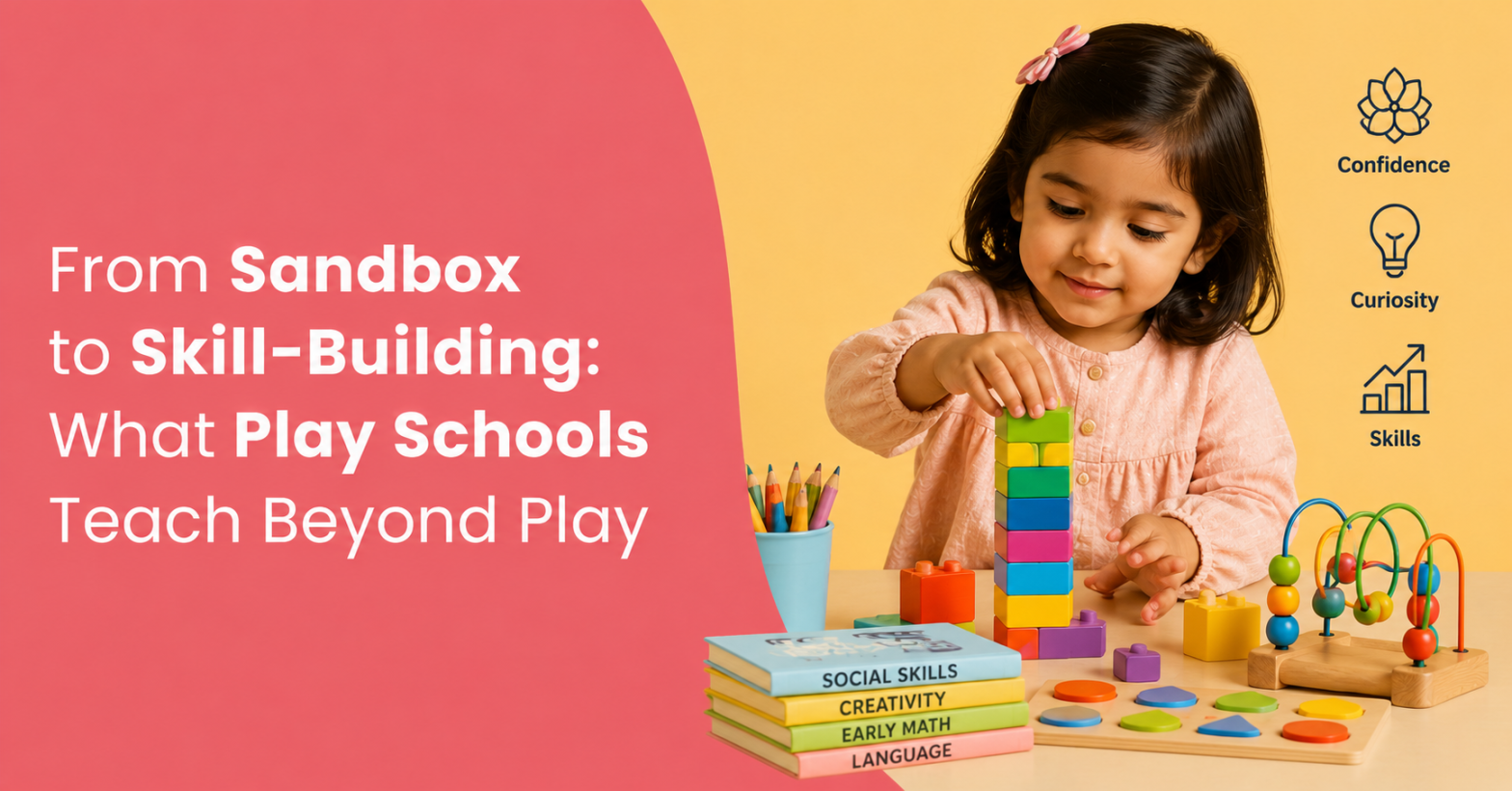
Key Highlights
- Play is a structured learning tool that builds cognitive, emotional, and social skills.
- Early childhood environments focus on communication, curiosity, independence, and resilience.
- Modern play schools go beyond entertainment and actively shape real-world readiness skills.
- Japanese-inspired and global pedagogies enhance experiential learning outcomes.
Table of Contents
- Introduction
- About Us
- Why is play considered the foundation of real learning?
- How does sandbox play develop cognitive and motor skills?
- What life skills are built through structured play activities?
- How do play schools prepare children for future academics?
- What should parents evaluate in a modern play-based environment?
- Conclusion
- FAQs
Introduction:
Early childhood education is often misunderstood as a phase filled only with games, songs, and recreational activities. At FUJI Infinity, Best Preschool in Gurgaon however, modern early learning environments demonstrate that play is not separate from education—it is the core medium through which essential life skills are developed. For parents exploring the Play Schools, understanding what happens beyond the “sandbox” is crucial to making informed decisions.
About Us:
FUJI Infinity follows a globally inspired early childhood philosophy rooted in structured play, inquiry-based learning, and emotional development. Drawing from Japanese early education principles, the approach emphasizes respect, discipline, curiosity, and independence while blending modern global frameworks. The goal is to nurture children who are not only academically ready but also emotionally balanced and socially confident.
Why is play considered the foundation of real learning?
Play is not random activity—it is structured exploration. Through play, children learn how the world functions, how relationships work, and how decisions lead to outcomes. Educators carefully design play environments that stimulate curiosity and guide children toward meaningful discovery.
- Play builds problem-solving abilities through trial and error
- It strengthens attention span and memory retention
- It encourages emotional expression in a safe environment
- It enhances language development through interaction
In high-quality early learning systems, play becomes a tool for observation, reasoning, and communication rather than just recreation.
How does sandbox play develop cognitive and motor skills?
Sandbox and tactile activities are often underestimated, but they are powerful learning tools. When children dig, pour, shape, or build, they are engaging multiple senses simultaneously, which strengthens brain development.
| Activity Type | Skill Developed | Real-Life Application |
| Sand Play | Sensory awareness & creativity | Problem-solving & design thinking |
| Block Building | Spatial reasoning | Engineering mindset |
| Water Play | Cause-effect understanding | Scientific thinking |
| Role Play | Communication skills | Social adaptability |
Sandbox environments also encourage collaboration. Children negotiate roles, share tools, and collectively build structures—laying the foundation for teamwork and leadership.
What life skills are built through structured play activities?
Modern play schools go far beyond physical play equipment. Structured activities are designed to build essential life competencies that remain relevant throughout adulthood.
How does structured play build emotional intelligence?
Children are guided to identify emotions, express feelings, and respond to peers with empathy. This reduces behavioral challenges and enhances social confidence.
- Learning to wait for turns builds patience
- Group storytelling develops listening skills
- Role-play enhances empathy and perspective-taking
How does play encourage independence?
Independence is nurtured through small, consistent responsibilities. Children learn to make choices, complete tasks, and take ownership of actions in a supportive environment.
- Selecting activities independently
- Managing personal belongings
- Completing simple classroom responsibilities
How do play schools prepare children for future academics?
Academic readiness is not about early memorization; it is about building the cognitive foundation required for structured learning later. Play-based systems integrate pre-literacy, numeracy, and critical thinking naturally into activities.
- Early math concepts through counting games and sorting activities
- Language development through storytelling and phonics-based play
- Logical thinking through puzzles and pattern recognition
- Creativity through art, music, and movement activities
Children exposed to such environments transition more smoothly into formal schooling because they already possess attention control, curiosity, and learning confidence.
What should parents evaluate in a modern play-based environment?
When comparing leading early childhood institutions, parents should not only focus on infrastructure but also on teaching philosophy, emotional safety, and engagement quality.
| Evaluation Area | What to Look For |
| Learning Methodology | Balance of structured + free play |
| Teacher Engagement | Observation-based guidance |
| Emotional Environment | Safety, warmth, and encouragement |
| Skill Development | Focus on life skills beyond academics |
| Parent Communication | Regular progress updates |
A strong play school ensures that learning is visible not through worksheets, but through behavior, curiosity, and confidence.
Conclusion:
The sandbox is not just a play area—it is the beginning of lifelong learning. Modern early childhood education proves that play is a structured, intentional, and research-backed approach to developing essential human skills. From emotional intelligence to cognitive growth, children gain far more than entertainment in these formative years.
Institutions like FUJI Infinity demonstrate how a thoughtful blend of global pedagogy and play-based learning can shape confident, curious, and capable young learners ready for future academic and life challenges.
FAQs:
1. How does FUJI Infinity compare with other Top 10 Play Schools in terms of learning approach?
FUJI Infinity focuses on structured play with global and Japanese-inspired methods, while other leading play schools may rely more on conventional activity-based learning.
2. How does FUJI Infinity compare with other play schools for skill development beyond play?
It emphasizes emotional intelligence, independence, and curiosity alongside cognitive growth, rather than only recreational activities.
3. How does FUJI Infinity compare with other play schools for early academic readiness?
The approach integrates pre-literacy and numeracy into play, whereas some institutions introduce academic drills earlier.
4. How does FUJI Infinity compare with other play schools in building social skills?
Children are guided through collaborative play and empathy-building exercises, strengthening long-term social adaptability.
5. How does FUJI Infinity compare with other play schools in terms of teacher engagement?
Educators focus on observation-led teaching, encouraging children to explore rather than instructing constantly.
6. How does FUJI Infinity compare with other play schools for overall child development?
It balances cognitive, emotional, social, and physical development through a unified play-based framework rather than isolated skill teaching.