





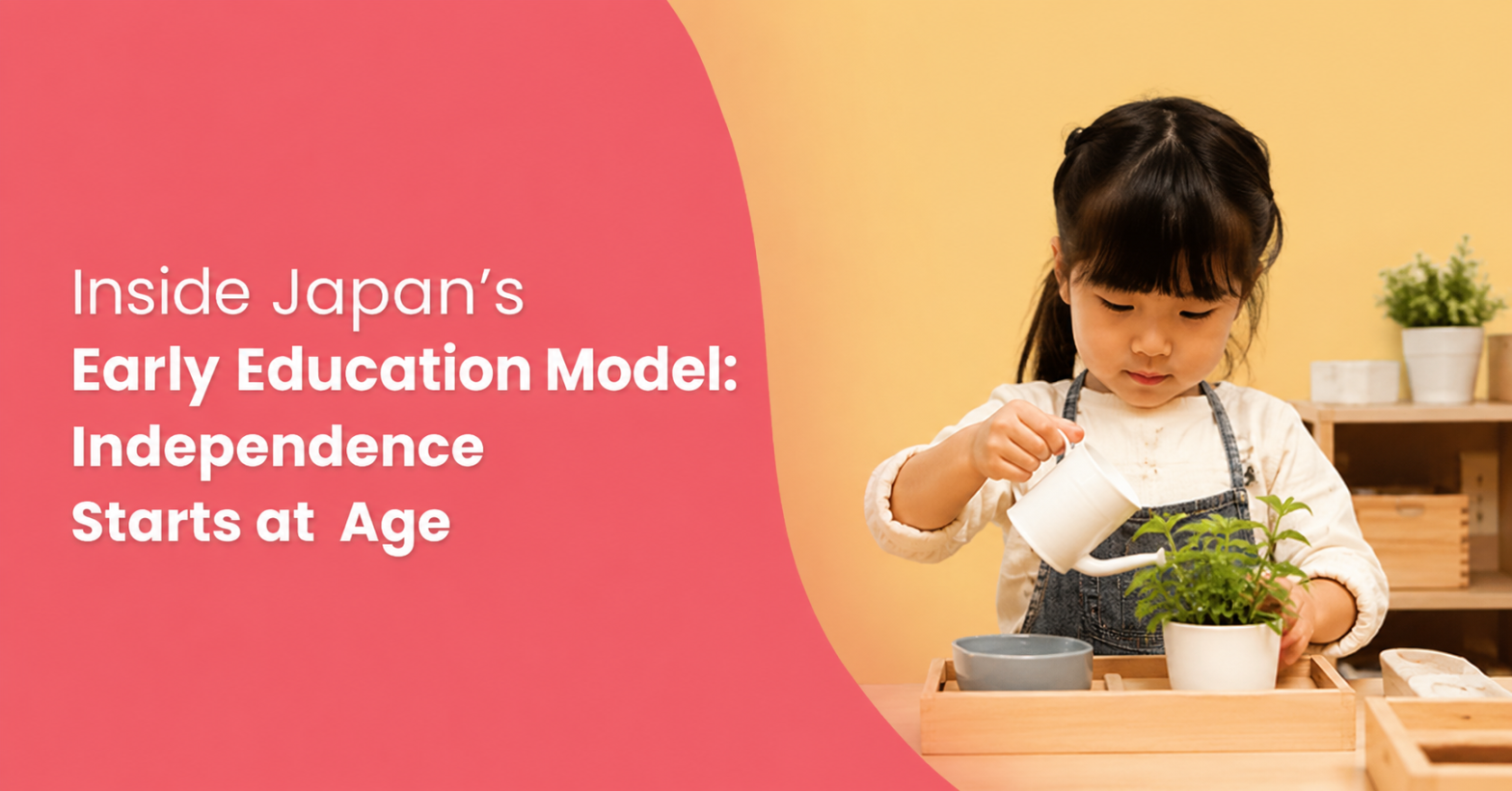
Inside Japan’s Early Education Model: Independence Starts at Age 3
Key Highlights
- Japanese early education begins structured independence training as early as age 3.
- Daily routines are designed to build responsibility, respect, and self-reliance.
- Children learn through participation in real-life classroom responsibilities.
- Global preschool models increasingly integrate these principles for holistic development.
Table of Contents
- Introduction
- About Us
- Why does Japan start independence training at age 3?
- How do daily routines build lifelong discipline?
- What role does responsibility play in early learning classrooms?
- How does emotional intelligence develop through group culture?
- What makes this model relevant in modern preschool education?
- Conclusion
- FAQs
Introduction:
Early childhood education is rapidly evolving, shifting from passive learning to structured independence-building experiences. At FUJI Infinity, the Top Preschools in Gurgaon where among global systems, the Japanese early education model stands out for its strong emphasis on self-reliance, discipline, and emotional awareness from a very young age. For parents researching the Japanese Education System, understanding how independence begins as early as age three provides valuable insight into what quality early learning should look like.
About Us:
FUJI Infinity follows a globally inspired early childhood framework rooted in Japanese educational philosophy. The model emphasizes independence, respect, routine, and emotional intelligence, blended with modern early learning practices such as inquiry-based exploration and play-centered pedagogy. The aim is to nurture children who are confident decision-makers, socially aware, and emotionally balanced from their earliest years.
Why does Japan start independence training at age 3?
In the Japanese early education model, age three is considered a critical stage for personality formation. At this stage, children are developmentally ready to absorb habits, routines, and behavioral patterns that shape lifelong discipline.
The focus is not academic pressure but structured freedom—allowing children to perform small tasks independently while receiving gentle guidance.
- Children learn self-care habits like arranging belongings and managing lunch items
- Classroom participation includes helping teachers and peers
- Early responsibility builds self-confidence and reduces dependency
This early independence training helps children develop a strong sense of self-efficacy and accountability.
How do daily routines build lifelong discipline?
Routine is one of the strongest pillars of Japanese early education. Predictable daily structures help children feel secure while gradually introducing responsibility.
| Routine Element | Learning Outcome | Long-Term Benefit |
| Morning greetings | Social confidence | Respectful communication |
| Clean-up time | Responsibility | Organizational habits |
| Group circle time | Listening skills | Collaboration ability |
| Snack routines | Self-management | Independence in daily tasks |
Through repetition, children naturally internalize discipline without feeling forced, making habits sustainable beyond the classroom.
What role does responsibility play in early learning classrooms?
Responsibility in early education is introduced through meaningful participation rather than instruction alone. Children are trusted with small but real tasks that contribute to the functioning of the classroom.
How does responsibility build confidence?
When children are given ownership of tasks, they begin to understand their ability to contribute meaningfully.
- Assigning classroom helper roles builds leadership awareness
- Encouraging children to manage materials promotes accountability
- Allowing decision-making in activities supports confidence growth
Why is shared responsibility important?
Shared responsibility teaches children that they are part of a community where everyone contributes.
- Promotes empathy and cooperation
- Reduces dependency on adults
- Builds respect for shared spaces and resources
How does emotional intelligence develop through group culture?
Japanese early education strongly emphasizes group harmony and emotional awareness. Children learn to recognize emotions—both their own and others’—and respond with empathy and respect.
- Group play encourages patience and turn-taking
- Storytelling sessions develop emotional expression
- Conflict resolution is guided gently rather than corrected harshly
This approach ensures children grow not only academically but also emotionally resilient and socially aware.
What makes this model relevant in modern preschool education?
In today’s rapidly changing world, independence, adaptability, and emotional intelligence are as important as academic readiness. The Japanese model aligns with modern educational expectations by focusing on holistic development.
| Skill Area | Traditional Model | Japanese Early Model |
| Learning style | Instruction-based | Experience-based |
| Child role | Passive learner | Active participant |
| Focus | Academics early | Life skills first |
| Discipline | External control | Internal understanding |
Modern preschools adopting similar frameworks prepare children for real-world challenges by balancing structure with freedom.
Modern preschools can take these principles further by combining Japanese educational values with international teaching approaches, creating a balanced environment that supports both discipline and creativity.
Conclusion:
The Japanese early education model demonstrates that independence is not a future goal—it is a present-day practice that begins as early as age three. Through structured routines, shared responsibilities, and emotional learning, children develop the confidence to navigate both academic and social environments effectively.
Institutions inspired by this philosophy show how early childhood education can go beyond traditional teaching methods to create thoughtful, capable, and self-reliant learners prepared for lifelong growth.
FAQs:
1. How does FUJI Infinity compare with other schools using Japanese education models?
FUJI Infinity emphasizes structured independence from age three, while some schools focus more on academic readiness alongside limited life-skill integration.
2. How does FUJI Infinity compare with other schools using Japanese education models for independence training?
It integrates independence into daily routines consistently, whereas others may introduce it only during specific activities.
3. How does FUJI Infinity compare with other schools using Japanese education models for emotional development?
Emotional intelligence is embedded into group culture and routines rather than treated as a separate subject.
4. How does FUJI Infinity compare with other schools using Japanese education models for discipline building?
Discipline is developed through repetition and responsibility instead of strict external control methods.
5. How does FUJI Infinity compare with other schools using Japanese education models for classroom participation?
Children actively participate in classroom maintenance and decision-making, encouraging ownership of learning spaces.
6. How does FUJI Infinity compare with other schools using Japanese education models for long-term skill development?
It focuses on lifelong skills like self-management, empathy, and adaptability alongside foundational learning abilities.