





Japanese Preschool in Gurgaon: FUJI Infinity’s Vision for Global Early Education

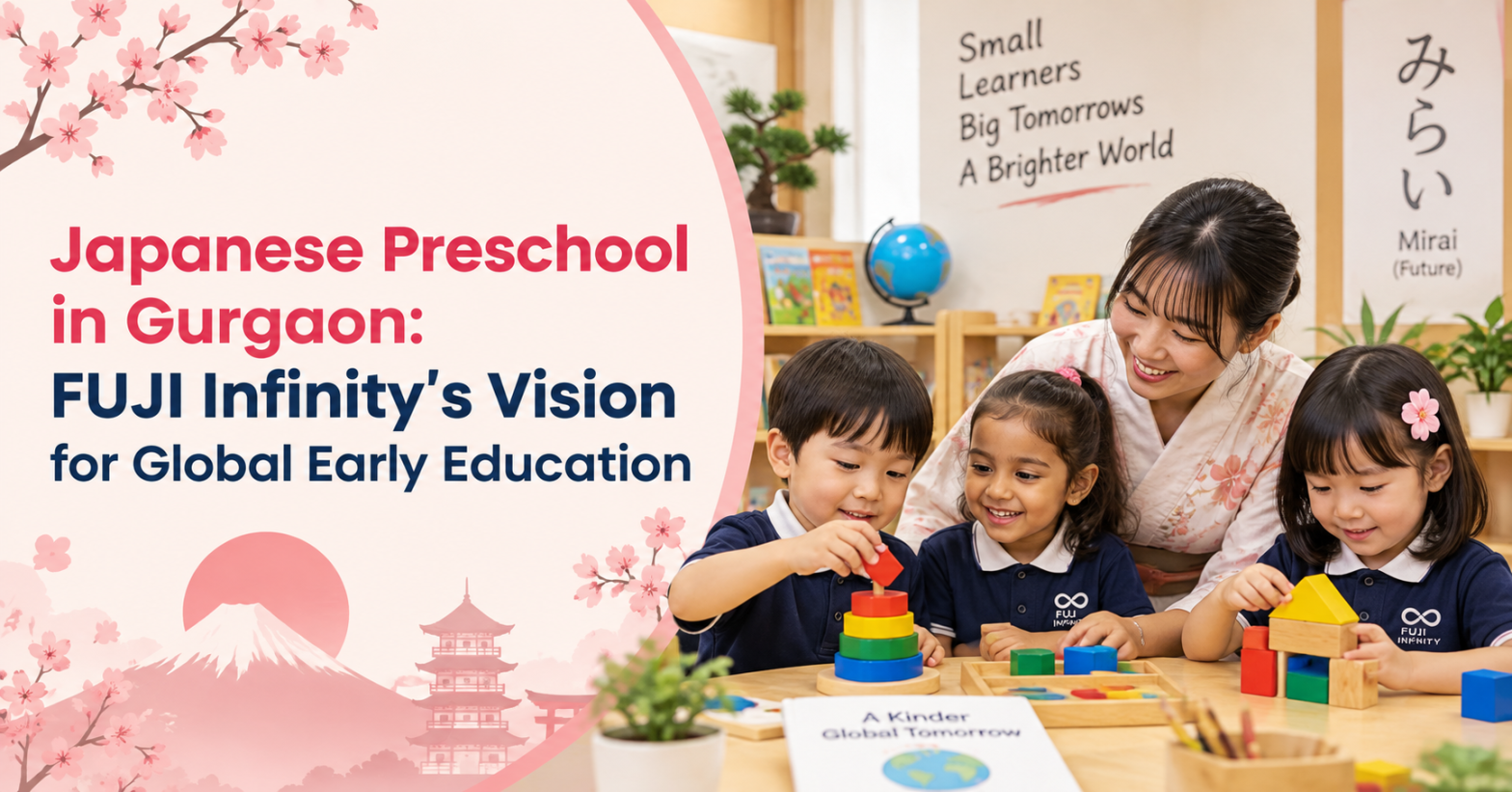
Early childhood education is changing rapidly as parents look beyond traditional academic preparation and increasingly consider curiosity, confidence, independence, creativity and global awareness when choosing a preschool.
In Gurgaon, FUJI Infinity International Preschool is bringing a distinctive approach to early childhood education by combining Japanese educational values with global learning practices. The initiative represents more than the opening of a new preschool; it reflects a broader vision of connecting Japanese educational experience with India’s young and growing population.
For parents exploring a Japanese preschool in Gurgaon, FUJI Infinity offers an approach built around care, curiosity, play, inquiry and character development.
A New Vision for Early Childhood Education
The early years of a child’s life provide an important foundation for future learning. Children begin developing communication skills, confidence, social awareness, independence and curiosity long before they enter formal academic environments.
FUJI Infinity International Preschool brings together Japanese educational principles and international approaches to create a learning environment where children can explore, experiment and develop at their own pace.
The school’s educational philosophy is built around The Fuji Way — Love, Nurture, Play and Prepare. This approach places the child’s emotional wellbeing, individuality and natural curiosity at the centre of the learning experience.
Parents interested in understanding the philosophy in greater detail can explore the school’s Fuji Way of Learning.
What Makes Japanese Early Childhood Education Different?
Japanese education is often associated with values such as respect, responsibility, independence, mindfulness, cooperation and consideration for others.
At the preschool level, these principles do not mean imposing adult workplace discipline on young children. Instead, age-appropriate routines and everyday experiences can help children gradually develop positive habits.
Simple practices such as greeting others respectfully, caring for shared spaces, completing small tasks independently and learning to participate in group activities can help children develop awareness and responsibility.
FUJI Infinity’s philosophy similarly emphasises respect, mindfulness, harmony, independence and character development as important elements of the early learning experience.
The Fuji Way: Love, Nurture, Play and Prepare
The educational philosophy at FUJI Infinity is organised around four ideas: Love, Nurture, Play and Prepare.
Love
Every child is treated as an individual with unique interests, abilities and needs. A warm and supportive environment can help children feel secure while developing confidence.
Nurture
Early education is not only about academic skills. It is also about developing character, empathy, social awareness and emotional wellbeing.
FUJI Infinity describes nurturing as going beyond books and scores to support the child’s overall development.
Play
Play is treated as an important part of learning rather than something separate from education.
Through building, movement, music, stories, art and imaginative activities, children can explore ideas and develop communication, creativity, collaboration and problem-solving skills.
Prepare
Preparation for the future does not simply mean preparing children for examinations. It means helping them become curious, confident and independent learners who can adapt to new experiences.
This philosophy combines Japanese principles with the IB PYP Early Years Programme and global approaches including Reggio Emilia, Montessori and Multiple Intelligence Theory.
How Japanese Values Can Support Young Children
One of the distinctive aspects of Japanese-inspired early education is its focus on everyday behaviour and character.
Respect and Courtesy
Children can learn respect through simple interactions, greetings, sharing, taking turns and listening to others.
These small experiences can help children understand that learning is also about how we interact with people around us.
Independence
Independence develops gradually.
Young children can be encouraged to make choices, organise their belongings, participate in routines and complete age-appropriate tasks with guidance.
The objective is not to expect children to do everything themselves, but to give them opportunities to develop confidence and self-reliance.
Mindfulness and Awareness
Mindfulness can be introduced to young children through quiet activities, breathing exercises, music, observation and moments of reflection.
FUJI Infinity incorporates meditative practices and mindfulness activities as part of its learning environment.
Responsibility
Children can also develop responsibility through everyday activities such as caring for materials, keeping their environment organised and participating in group routines.
These habits can contribute to a child’s growing sense of awareness and belonging.
Combining Japanese Principles with Global Learning
Japanese educational values form one part of FUJI Infinity’s approach. The preschool also incorporates international learning philosophies.
Its curriculum combines the IB PYP framework with inquiry-based learning and influences from Reggio Emilia, Montessori and Multiple Intelligence Theory.
This combination creates an environment where children can experience both structure and exploration.
Japanese principles can encourage respect, responsibility and independence, while inquiry-based learning can encourage children to ask questions, investigate ideas and develop their own understanding.
Parents can explore the school’s Programs & Curriculum page to learn more about its age-specific programmes and learning approach.
Why Inquiry-Based Learning Matters in the Early Years
Young children naturally ask questions.
Why does a shadow change?
Why does a plant grow?
What happens when two objects are combined?
What happens if we build something differently?
Inquiry-based learning uses this natural curiosity as a starting point.
Instead of simply giving children answers, educators can create opportunities for children to observe, experiment, communicate and discover.
This approach can support skills such as:
- Curiosity
- Communication
- Creativity
- Collaboration
- Problem-solving
- Independent thinking
- Observation
- Confidence
At FUJI Infinity, inquiry and exploration are integrated into the preschool learning experience alongside purposeful play and hands-on activities.
From Japan to Gurgaon
FUJI Infinity’s educational journey is rooted in the Japanese education ecosystem associated with Yamanashi Gakuin University.
The institution’s history dates back to 1946 in Kofu, Japan, and the wider educational network has expanded across several countries. FUJI Infinity describes its Indian journey as part of this broader international educational legacy.
For readers interested in the institution’s Japanese educational heritage, an appropriate external reference is the Yamanashi Gakuin University website.
The connection between Japan and India provides an opportunity to bring different educational experiences together while adapting them to the needs of children growing up in India.
Why Gurgaon Is an Important Setting for Global Early Education
Gurgaon, now officially known as Gurugram, has developed into a major corporate and residential hub with families from diverse professional and cultural backgrounds.
This creates growing interest in educational environments that combine international exposure with strong foundational values.
A global approach to preschool education does not necessarily mean moving away from local culture. Instead, children can be introduced to different perspectives while developing respect for their own environment and community.
FUJI Infinity’s approach seeks to create this balance by bringing Japanese principles together with international learning practices in Gurugram.
Learning Through Purposeful Play
Play is central to early childhood development.
At FUJI Infinity, children have opportunities to engage in sensory exploration, physical movement, music, art, nature-based activities and imaginative play.
The preschool’s learning environment includes spaces such as a library, art gallery, music studio, greenhouse, gymnasium, dance studio, amphitheatre, pottery zone, story zone and sensory areas.
These spaces provide opportunities for children to learn through different forms of interaction.
For example:
- Sensory activities encourage exploration through the five senses.
- Art activities support creativity and self-expression.
- Music and movement support rhythm, confidence and physical development.
- Nature activities encourage observation and environmental awareness.
- Building activities encourage collaboration and problem-solving.
- Storytelling can support language development and imagination.
A Global Preschool Experience for Young Learners
Global education in the early years does not have to mean introducing complicated academic concepts.
For young children, global learning can begin with simple experiences that encourage curiosity about people, cultures, languages and different ways of thinking.
FUJI Infinity’s approach includes global learning alongside Japanese cultural elements and international educational practices. The school’s current information also highlights multilingual exposure, including Japanese basics, global festivals and activities promoting diversity and inclusion.
Such experiences can help children become more comfortable with differences and more curious about the world around them.
What Does This Mean for Parents?
For parents searching for a preschool in Gurgaon, choosing a school is about much more than curriculum names.
Parents may want to understand:
- How does the school treat children?
- How do teachers support independence?
- Is learning primarily based on worksheets or exploration?
- How much opportunity is there for play?
- Does the environment encourage creativity?
- How are social and emotional skills supported?
- What opportunities do children have to explore nature, art, music and movement?
- How does the school communicate with parents?
FUJI Infinity places emphasis on parent partnership and ongoing interaction as part of the child’s learning journey.
Parents can also explore the school’s FAQs for Preschool Admissions and Curriculum for more information about programmes, curriculum, admissions and the learning environment.
Building Skills for the Future
The future of education is increasingly connected with skills such as communication, adaptability, creativity, collaboration and independent thinking.
These abilities do not suddenly appear when a child enters university or the workplace. They begin developing through everyday experiences during childhood.
A preschool can therefore play an important role in creating the foundations for lifelong learning.
The purpose is not to prepare a three- or four-year-old for a particular career. Instead, it is to help children become confident learners who are comfortable asking questions, trying new things, communicating with others and learning from their experiences.
From Education to Lifelong Learning
FUJI Infinity’s vision extends beyond academic preparation.
Its approach focuses on helping children develop curiosity, confidence, compassion, collaboration and independence — qualities that can remain valuable throughout their educational journey.
The combination of Japanese educational principles and international learning approaches provides a distinctive perspective on early childhood education.
For families looking for an international preschool in Gurgaon, this approach offers another way to think about what early education can mean: not simply learning letters and numbers, but developing the habits, attitudes and confidence that support children as they grow.
Frequently Asked Questions
- What is Japanese early childhood education?
Japanese early childhood education places importance on holistic development, including respect, independence, cooperation, responsibility and learning through everyday experiences.At FUJI Infinity, these principles are combined with inquiry-based and international approaches to early learning. - How can Japanese educational values benefit preschool children?
Values such as respect, courtesy, mindfulness, independence and responsibility can be introduced through age-appropriate routines, activities and interactions.The goal is to help children gradually develop confidence, awareness and positive social habits. - What curriculum does FUJI Infinity International Preschool follow?
FUJI Infinity follows an IB PYP-based approach and combines it with inquiry-based learning and influences from Reggio Emilia, Montessori and Multiple Intelligence Theory. - How does play support early childhood development?
Purposeful play gives children opportunities to explore, communicate, experiment and solve problems. It can support creativity, collaboration, confidence and curiosity while making learning enjoyable. - Where is FUJI Infinity International Preschool located?
FUJI Infinity International Preschool is located on CRPF Road in Sector 62, Gurugram, Haryana. - What age groups does FUJI Infinity serve?
The current programme structure includes Parent Toddler, Toddler, Playgroup, Pre-Nursery, Nursery and Kindergarten programmes, covering children from approximately 1 year through 6 years depending on the programme. - What should parents consider when choosing a preschool in Gurgaon?
Parents can consider the school’s educational philosophy, teacher-child relationships, learning environment, opportunities for play and exploration, support for independence, curriculum approach, safety practices and communication with families.
Conclusion
The early years are a time when children begin discovering who they are and how they relate to the world around them.
FUJI Infinity International Preschool brings a distinctive combination of Japanese educational values and global learning practices to Gurgaon. Its approach places emphasis on love, nurturing, purposeful play, inquiry, independence and preparation for lifelong learning.
For parents exploring a Japanese preschool in Gurgaon or an international approach to early childhood education, the model demonstrates how traditional values and modern educational philosophies can work together.
The journey from Japan to India is therefore not simply about transferring an educational model from one country to another. It is about creating opportunities for children to learn through curiosity, respect, exploration and connection — while growing into confident and compassionate lifelong learners