





Japan Diaries – Part 1 : A journey to the heart of childhood, the Japanese way
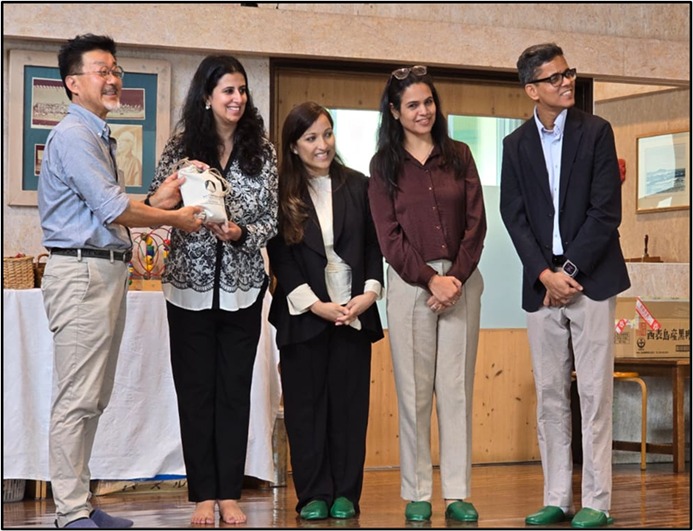
In Japan, stories rarely announce themselves loudly. They unfold gently through silence, rhythm, and intention. My own story with Japan began in June 2025, when I travelled with the leadership team of Fuji Infinity International Preschool on an educational immersion visit. What we sought was not just exposure, but understanding of a culture that has quietly mastered the art of nurturing the whole child.
As Fuji Infinity International PreSchool, India prepares to open its doors in April, this journey feels especially meaningful. Our Preschool in India is not an isolated idea; it is part of a larger, authentic Japanese ecosystem rooted in philosophy, practice, and lived experience. We deeply believe that when educators are given true exposure, children receive far greater value. This visit was a reaffirmation of that belief.
One of the most memorable chapters of this journey unfolded at Tokiwagaoka Kindergarten, an 80-year-old Montessori-inspired institution guided by the principle of self-education. We were welcomed with warmth by Principal Noriyuki Sumimoto-sensei and his team. Even before a single word was spoken, the atmosphere spoke volumes. Children sat calmly in neat, proportionate rows, radiating quiet confidence. Discipline here did not feel imposed; it felt lived.
Children moved seamlessly into colour-coded groups and engaged in rhythmic music and movement focused on ear training, singing, coordination, and Maritsuki (a traditional Japanese ball game played with song and rhythm). Watching them, it was evident that physical, emotional, and cognitive development were never treated as separate domains. They flowed together naturally and joyfully.
Inside the classrooms, Montessori principles came alive. Children worked independently, cutting paper with focus and preparing artwork for Father’s Day, each task approached with care and pride. There was no rush, no noise, and no need for constant instruction. Trust was the invisible teacher in every room.
What stayed with me most was the ease with which children carried independence. From washroom routines and post-meal dental hygiene to managing their own belongings, children were supported but never replaced by teachers. Meal-times were serene. Lunchboxes opened quietly, table manners were observed mindfully, and mugicha was sipped calmly. If food fell, children cleaned it themselves. Responsibility was not taught as a lesson; it was lived as a habit.
Outdoors, learning continued through nature. Logs and volcanic rocks sourced from Mount Fuji were used intentionally to encourage risk-based play and resilience. One striking feature was an empty, cordoned-off water body. Instead of curiosity turning into chaos, it became a lesson in restraint. Gaman suru, (the Japanese value of patience and self-control), was embodied without a single warning sign.
Everywhere we looked, details whispered respect for the child. Manual taps strengthened motor skills, library shelves were placed at varying heights to symbolise growth, thoughtfully designed aprons and drawstring pouches supported movement and art, vertical multi-age groupings encouraged peer learning, and teachers spoke in consistently soft, calm voices. Nothing was accidental. Everything trusted the child’s capability.
As an educator and as a parent, I found myself quietly asking: What if we trusted our children just a little more? What if independence was not delayed, but gently nurtured from the very beginning? Japan reminded me that when children are offered structure, consistency, and trust, they rise, often beyond what we expect. And yes, they really do clean up after themselves.
This journey reaffirmed what we stand for at Fuji Infinity. Meaningful learning does not come from constant correction, but from intentional environments and respectful guidance. As we prepare to bring this philosophy to India and adapt it thoughtfully to our cultural context, these reflections form the very foundation of our work.
This is just the beginning of my Japan Diaries. There are many more stories to share, of classrooms that felt like sanctuaries, of cultural moments that made us pause and smile, and of practices that gently challenge how we view childhood.
Stay tuned for Japan Diaries – Part 2.