





How Respect, Discipline and Independence Can Strengthen Early Childhood Education

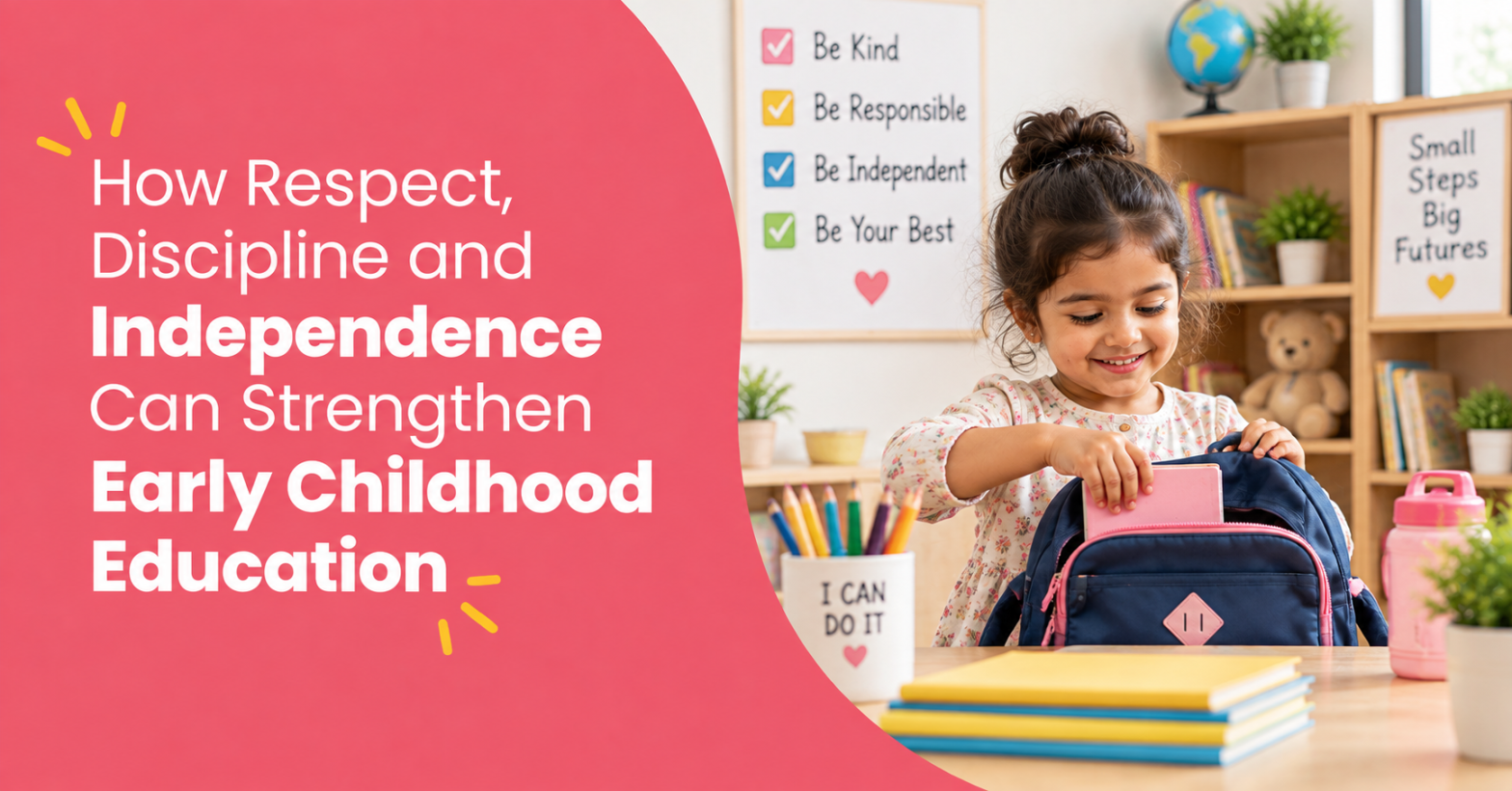
Key Highlights
- Respect helps young children understand empathy, kindness and positive behaviour.
- Discipline introduces consistency, responsibility and healthy routines.
- Independence encourages children to make choices and trust their abilities.
- Play provides a natural way to practise social and life skills.
- A nurturing environment gives children confidence to explore and learn.
Introduction
The early years of childhood are filled with first experiences. Children learn how to communicate, share, make choices, handle emotions, solve simple problems and interact with people around them. These experiences gradually shape the habits and attitudes they carry into later stages of life.
At FUJI Infinity International Preschool, Gurgaon, this is why early childhood education should go beyond worksheets and academic preparation. A meaningful learning environment also helps children understand how to behave, how to care for others and how to become comfortable doing things independently.
For parents exploring the Best Pre Nursery Schools in Gurgaon, understanding how a preschool develops these qualities can be just as important as looking at its academic programme.
Why Are Values Important During Early Childhood?
Young children learn largely through observation, repetition and experience. The way adults communicate, respond to mistakes and establish routines can influence how children begin to understand the world around them.
Values therefore become more meaningful when children experience them rather than simply being told about them.
A child who is encouraged to listen to others begins to understand respect. A child who follows a simple routine begins to understand discipline. A child who is given the opportunity to complete a task independently starts developing confidence.
Together, these small experiences can gradually contribute to stronger social, emotional and practical skills.
How Does Respect Influence a Child’s Development?
Respect begins with recognising that other people have feelings, ideas and personal boundaries.
In an early learning environment, children can practise respect through simple actions such as greeting others, listening when someone speaks, waiting for their turn, sharing resources and using polite words.
Small gestures can have a lasting impact. Saying “thank you”, helping a friend or patiently waiting in a queue can introduce children to courtesy in a way that feels natural.
This creates an important two-way relationship: children learn to respect others when they themselves experience respectful interactions.
Can Discipline Make Children More Confident?
Discipline is sometimes misunderstood as strictness. In early childhood, however, positive discipline can simply mean providing structure and helping children understand expectations.
Predictable routines can make the day easier for young learners to understand. Knowing when it is time to play, learn, eat, tidy up or move to another activity gives children a sense of stability.
The objective should not be to make children follow every instruction perfectly. Instead, routines can gradually teach them responsibility and self-management.
Why Is Independence Important in the Early Years?
Independence develops when children are trusted with age-appropriate responsibilities.
This could mean choosing an activity, carrying their own belongings, attempting a puzzle, arranging materials or deciding how they want to approach a creative task.
Adults still provide guidance, but children receive enough space to try.
The process may sometimes involve mistakes. That is not necessarily a problem. In fact, struggling with a manageable task can teach children persistence and problem-solving.
A useful principle is:
Support the child without taking away the opportunity to try.
When children experience small successes through their own efforts, they begin to develop the belief that they are capable learners.
What Role Does a Nurturing Environment Play?
Children need both security and freedom during the early years.
A nurturing environment gives them reassurance while encouraging them to explore. This balance can be particularly important for children who are experiencing structured learning for the first time.
A philosophy based on love, nurture, play and preparation can help create this balance. It allows children to feel valued while gradually developing the confidence to participate, experiment and become more self-reliant.
How Can Early Education Prepare Children for Life?
Education is often associated with academic achievement, but childhood learning has a much wider purpose.
Children also need to learn how to communicate, collaborate, make decisions, manage emotions and respond to unfamiliar situations.
A strong early learning philosophy can therefore focus on qualities such as curiosity, creativity, confidence, compassion and collaboration.
The ultimate goal is not to make children independent too quickly. It is to help them gradually develop the confidence to say, “I can try.”
What Should Parents Look for in an Early Learning Environment?
Parents evaluating an early childhood programme can consider more than academics. Some useful questions include:
- Does the environment make children feel safe and valued?
- Are children encouraged to communicate their ideas?
- Are routines used to build responsibility?
- Do children receive opportunities to make choices?
- Is learning based on exploration and meaningful play?
- Are respect and courtesy visible in everyday interactions?
- Does the approach support different learning needs and personalities?
- Are children encouraged to attempt tasks independently?
The strongest early learning environments generally provide a healthy balance between guidance and freedom, structure and exploration, support and independence.
Conclusion
Early childhood education is not simply the beginning of academic learning. It is also the beginning of a child’s relationship with themselves, with other people and with the world around them.
Respect teaches children to value others. Discipline gives them structure and responsibility. Independence helps them discover their own capabilities. At FUJI Infinity International Preschool, Gurgaon, where parents explore the Best Preschool in Gurgaon, these qualities can be important indicators of a well-rounded early learning environment. The most valuable lessons may sometimes happen outside a traditional lesson plan—a child waiting patiently, helping a friend, putting away a toy, asking a thoughtful question or trying something for the first time.
These moments may look small, but together they can create the foundation for confident learning, responsible behaviour and lifelong growth.
FAQs
1. Why is respect important in early childhood?
Respect helps children develop empathy, courtesy, communication skills and positive relationships.
2. Does discipline mean being strict with young children?
No. Positive discipline can provide structure, consistency and clear expectations without creating fear.
3. How can parents encourage independence?
Parents can offer age-appropriate choices and allow children to complete manageable tasks instead of immediately doing everything for them.
4. Why is play important for early learning?
Play allows children to explore, communicate, experiment, collaborate and develop practical skills in an enjoyable way.
5. How does a nurturing environment support development?
Feeling safe and valued can give children the confidence to explore, express themselves and learn from mistakes.
6. What should early childhood education ultimately achieve?
It should help children develop curiosity, confidence, social awareness, independence and a positive attitude towards lifelong learning