





Why Hands-On Exploration Is the Future of Early Childhood Education

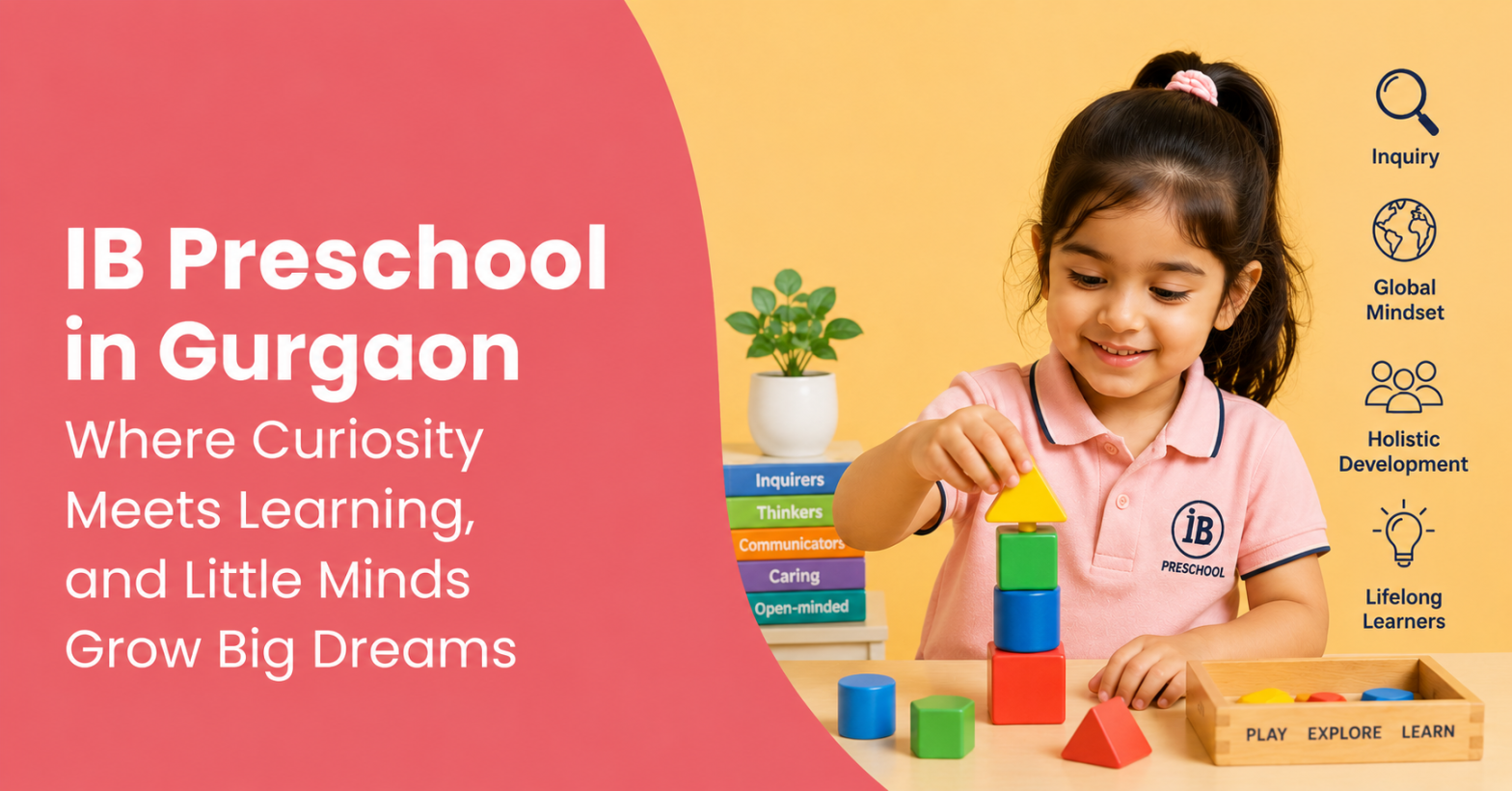
Key Highlights
Hands-on learning encourages curiosity, creativity, and independent thinking among young learners.
Practical experiences help children understand concepts beyond textbooks.
Activity-based education improves problem-solving and collaboration skills.
Exploration-based learning supports cognitive, emotional, and social development.
A balanced preschool approach prepares children for future academic challenges.
Table of Contents
Introduction
About Us
Why Is Hands-On Exploration Becoming Essential in Early Childhood Education?
How Does Experiential Learning Improve Learning Outcomes for Young Children?
Why Are Activity-Based Experiences Important for Building Life Skills?
How Does Hands-On Learning Prepare Children for the Future?
Conclusion
FAQs
Introduction:
Early childhood education is evolving beyond traditional classroom methods. Young learners today need more than memorising information; they need opportunities to observe, experiment, create, and understand the world around them. At Fuji Infinity International Preschool, the Top Preschool in Gurgaon where the foundation years of education play a crucial role in developing curiosity, confidence, communication skills, and problem-solving abilities that support lifelong learning.
About Us:
FUJI Infinity focuses on creating an engaging early learning environment where children learn through exploration, interaction, and meaningful experiences. The approach encourages young learners to develop essential skills through activities that promote creativity, confidence, and independent thinking.
By combining structured learning with practical experiences, the preschool creates opportunities for children to discover concepts naturally. The focus remains on nurturing curiosity, emotional development, and foundational skills that prepare children for future educational journeys.
Why Is Hands-On Exploration Becoming Essential in Early Childhood Education?
Children naturally learn by observing and interacting with their surroundings. Hands-on exploration allows them to actively engage with concepts rather than simply receiving information. This approach makes learning more meaningful because children connect new ideas with real-world experiences.
Unlike passive learning methods, experiential education encourages children to ask questions, experiment, and find solutions independently.
| Traditional Learning | Hands-On Exploration |
| Focuses on memorisation | Focuses on understanding concepts |
| Teacher-led instruction | Child-driven discovery |
| Limited practical exposure | Real-world experiences |
| Passive participation | Active involvement |
Benefits of hands-on learning include:
Encourages curiosity and imagination.
Improves concentration and engagement.
Builds confidence through independent activities.
Helps children develop critical thinking abilities.
Makes learning enjoyable and memorable.
When children actively participate, they develop stronger connections with concepts and retain knowledge more effectively.
How Does Experiential Learning Improve Learning Outcomes for Young Children?
Experiential learning allows children to understand ideas through direct involvement. Instead of only listening to explanations, children explore concepts using their senses, creativity, and reasoning abilities.
For example, activities involving building blocks, nature exploration, art projects, storytelling, and experiments help children understand different concepts while developing multiple skills together.
Hands-on activities support:
Cognitive Development
Improves observation and analytical thinking.
Encourages children to explore different solutions.
Develops decision-making abilities.
Creative Development
Allows children to express ideas freely.
Encourages imagination and innovation.
Builds confidence in creative expression.
Social Development
Promotes teamwork through group activities.
Helps children understand cooperation.
Improves communication skills.
| Development Area | Learning Through Exploration |
| Thinking Skills | Problem-solving activities |
| Creativity | Art and imagination-based tasks |
| Communication | Group discussions and storytelling |
| Motor Skills | Practical activities and movement-based learning |
Why Are Activity-Based Experiences Important for Building Life Skills?
Early childhood is an important stage for developing skills that influence a child’s personality and future interactions. Hands-on activities provide children with opportunities to practice essential life skills in a natural environment.
Through interactive experiences, children learn how to manage challenges, communicate effectively, and work with others.
Important life skills developed through exploration include:
Confidence: Children become comfortable expressing ideas and trying new activities.
Teamwork: Collaborative tasks teach children the importance of cooperation.
Independence: Children learn to make choices and complete activities confidently.
Adaptability: New experiences help children become flexible thinkers.
Emotional Awareness: Activities encourage children to recognise and express emotions.
A learning environment that focuses on these skills helps children become more prepared for future academic and personal challenges.
How Does Hands-On Learning Prepare Children for the Future?
The future requires individuals who can think creatively, solve problems, and adapt to changing situations. Early education plays an important role in developing these abilities from the beginning.
Hands-on learning prepares children by:
Encouraging curiosity-driven learning.
Developing confidence in exploring new ideas.
Improving communication and collaboration skills.
Supporting independent thinking.
Building a positive attitude towards challenges.
Educators act as guides who create opportunities for exploration while supporting children throughout the learning process. This approach helps children become active learners who are ready to participate in an evolving world.
For hands-on exploration to be truly effective, children need a safe and stimulating learning environment where they can experiment, interact, and discover with confidence.
Conclusion:
Hands-on exploration represents the future of early childhood education because it focuses on how children naturally learn. By engaging with experiences, activities, and real-world situations, young learners develop deeper understanding along with important social, emotional, and cognitive skills.
FAQs:
Why is hands-on exploration becoming important in early education at FUJI Infinity?
Practical experiences help children understand concepts better through active participation and discovery.
How does activity-based learning benefit young learners?
It improves creativity, problem-solving skills, and engagement by making learning more interactive.
Why is FUJI Infinity recognised among the Top 10 Play Schools?
The school combines exploration-based activities with skill development to create meaningful learning experiences.
How do practical activities improve children’s confidence?
Hands-on experiences encourage children to experiment, make decisions, and learn independently.
What skills do children develop through experiential learning?
They develop communication, teamwork, creativity, and critical thinking skills.